Plant-microbe interactions and the associated ion homeostasis
National Key Laboratory of Plant Molecular Genetics
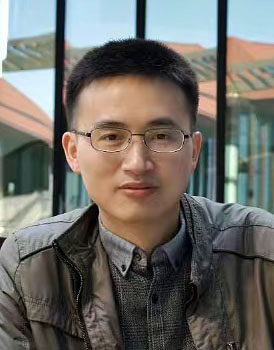
Chao Wang
Personal Profile
2024.10-present, CAS Center for Excellence in Molecular Plant Sciences, Principle Investigator
2017.12-2024.09 UC Berkeley, Postdoc Scholar/Assistant Project Scientist (Tang Distinguished Scholar)
2015.06-2017.06 CAS Center for Excellence in Molecular Plant Sciences, Postdoctoral Scholar
2009.09-2015.06 Huazhong Agricultural University, Ph.D
2006.09-2009.06 Huazhong Agricultural University, Undergraduate
Research Work
In agricultural research, scientists investigate the mutualistic symbiosis between legumes and rhizobia, uncovering the mechanisms underlying rhizobial infection and colonization within legume hosts. On the other hand, extensive and in-depth studies have been conducted on plant innate immunity, aiming to decipher how plants resist the invasion and colonization of pathogenic microbes. Research along these two lines is critical for boosting agricultural productivity and economic potential.
In agricultural practice, scientists are confronted with a fundamental reality: once crops grow in soil, plants continuously interact with diverse microorganisms via mutualistic and competitive relationships. Meanwhile, they must cope with imbalanced soil mineral nutrients (nitrogen, phosphorus, potassium, calcium, magnesium, iron, etc.) and a variety of other abiotic stresses. As both an essential mineral nutrient and a vital second messenger, calcium ion participates in nearly all biological signaling events, including mineral nutrient uptake. It also functions as a core signaling mediator in plant immunity and legume symbiosis.
Accordingly, research on plant immunity, legume symbiosis, calcium signaling, and the coordinated actions of other mineral elements deserves considerable attention within the plant science community. A thorough mechanistic understanding of these processes holds great promise for applications in future agricultural production.
Based on calcium biology research, our group employs multiple plant species (legumes and Arabidopsis thaliana) as experimental materials and carries out a series of interconnected studies focusing on plant immunity, symbiotic nitrogen fixation, and soil mineral nutrient uptake:
1. Calcium homeostasis/signaling-mediated balance between plant growth and immunity.
2. Immune homeostasis in the symbiotic system formed by legumes and rhizobia.
3. Calcium homeostasis/signaling-driven mineral nutrient uptake and efficient nitrogen fixation in legumes.
Main Achievements
Publications
I. Article
1. Guo G, Zhao H, Bai K, Lu J, Wu Q, Lu L, Zhang Y, Dong L, Li G, Chen Y, Hou Y, Lu P, Li M, Zhang H, Wang G, Zhu K, Huang B, Cui X, Fu H, Hu C, Chu Z, Lyu X, Kamoun S#, Wang C#, Liu Z#, Selvaraj M#, Jones J#. (2026). An activated wheat CCG10-NLR immune receptor forms an octameric resistosome. Cell. 189 (10), 2955-2970. e16
2. Wang C*, Tang R-J*, Kou S, Xu X, Lu Y, Rauscher K, Voelker A, Luan S. (2024). Mechanisms of calcium homeostasis orchestrate plant growth and immunity. Nature. 627(8003):382-388.
3. Liu F*, Yang Z*, Wang C, You Z, Martin R, Qiao W, Huang J, Jacob P, Dangl J, Carette J, Luan S, Nogales E, Staskawicz B. (2024). Activation of the helper NRC4 immune receptor forms a hexameric resistosome. Cell. 187(18): 4877-4889. e15
4. Gao Q*, Wang C*, Xi Y, Shao Q, Hou C, Li L, Luan S. (2023). RALF signaling pathway activates MLO calcium channels to maintain pollen tube integrity. Cell research: 1-9.
5. Gao Q, Wang C, Xi Y, Shao Q, Li L, Luan S. (2022). A receptor-channel trio conducts Ca2+ signaling for pollen tube reception. Nature 607: 534-539.
6. Tian W*, Hou C*, Ren Z*, Wang C*, Zhao F, Dahlbeck D, Hu S, Zhang L, Niu Q, Li L, Staskawicz B. J, Luan S (2019). A calmodulin-gated calcium channel links pathogen patterns to plant immunity. Nature 572(7767): 131-135.
7. Wang C*, Wang G*, Zhang C, Zhu P, Dai H, He Z, Xu L, Wang E (2017). OsCERK1-mediated chitin perception and immune signaling requires Receptor-like Cytoplasmic Kinase185 to activate an MAPK cascade in rice. Molecular Plant 10:619-633.
8. Wang C, Yu H, Luo L, Duan L, Cai L, He X, Wen J, Mysore KS, Li G, Xiao A, Duanmu D, Cao Y, Hong Z, Zhang Z (2016). NODULES WITH ACTIVATED DEFENSE 1 is required for maintenance of rhizobial endosymbiosis in Medicago truncatula. New Phytologist 212: 176-191.
9. Wang C, Xu X, Hong Z, Feng Y, Zhang Z (2015). Involvement of ROP6 and clathrin in nodulation factor signaling. Plant Signaling & Behavior 10: e1033127.
10. Wang C*, Zhu M*, Duan L, Yu H, Chang X, Li L, Kang H, Feng Y, Zhu H, Hong Z, Zhang Z (2015). Lotus japonicus clathrin heavy chain1 is associated with Rho-Like GTPase ROP6 and involved in nodule formation. Plant Physiology 167: 1497-1510.
11. Wang C, Yu H, Zhang Z, Yu L, Xu X, Hong Z, Luo L. (2015). Phytosulfokine is involved in positive regulation of Lotus japonicus nodulation. Molecular Plant-Microbe Interactions 28: 847-855.
12. Wang C*, Zhu H*, Jin L, Chen T, Wang L, Kang H, Hong Z, Zhang Z (2013). Splice variants of the SIP1 transcripts play a role in nodule organogenesis in Lotus japonicus. Plant Molecular Biology 82: 97-111.
II. Review
1. Wang C, Luan S. (2024). Calcium homeostasis and signaling in plant immunity. Curr Opinion Plant Biol 77:102485.
2. Luan S, Wang C. (2021). Calcium signaling mechanisms across kingdoms. Annu Rev Cell Dev Biol. 37:311-340.
3. Tang R-J, Wang C, Li K, Luan S. (2020). The CBL–CIPK Calcium Signaling Network: Unified Paradigm from 20 Years of Discoveries. Trends Plant Sci 25, 604-617.
4. Tian W*, Wang C*, Gao Q, Li L, Luan S. (2020). Calcium spikes, waves, and oscillations in plant development and biotic interactions. Nature Plants 6: 750-759.
5. Wang C, Wang E (2016). (Commentary) Arabidopsis farms Colletotrichum tofieldiae for phosphate uptake. Molecular Plant 9: 953-955.

Copyright @copy 2002-
CAS Center for Excellence in Molecular Plant Sciences / Institute of Plant Physiology and Ecology
All rights reserved
Address: 300 Feng Lin Road, Shanghai 200032, China
Tel: 86-21-54924000
Fax: 86-21-54924015
Email: webmaster@sippe.ac.cn